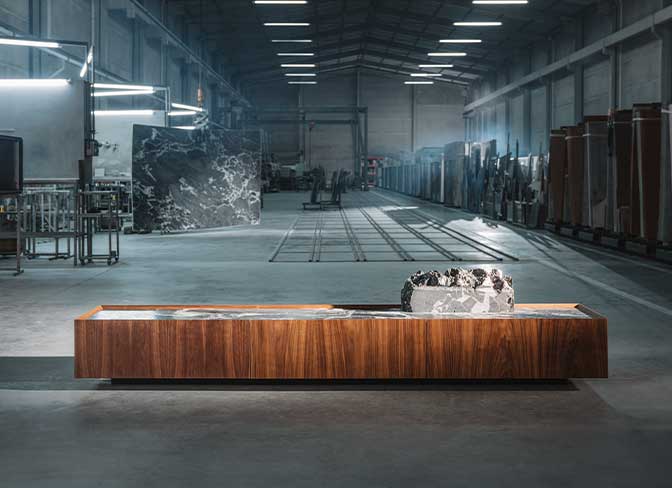
For a long time, part of the furniture was designed to complement the architecture discreetly. Today, some pieces take on a different role: they help guide the eye, establish proportions, and actively participate in the composition.
This change expands the possibilities of the project. A piece of furniture can organize relationships within the environment, create a point of reference, or modify the reading of the space based on its scale, shape, and positioning.
It is in this territory that the Evvai Collection finds its expression.
When the furniture starts to build the composition
An environment can also be organized from a single piece.
A buffet can establish a visual axis. A center table helps define relationships in the living room. A bar can mark a specific area of the composition, while a TV stand can take on an architectural presence without losing its function.
In Evvai, these four typologies receive a reading signed by Gustavo Bertolini. The collection works with pure form, constructive precision and a combination of wood, stone and metal.
Each piece establishes relationships with what is around it: voids, circulation, architecture, lighting, and other elements of the interior.
Form, matter and scale
Wood, stone and metal form the language of Evvai. The natural blades and Grigio and Bianco Nuvolato marbles bring their own nuances and variations to the material, while the metal adds structural lightness and precision to the whole.
The meetings between these materials also contribute to the design. Stone with stone, stone with wood, wood with metal: each joint is meticulously planned and helps define volumes and proportions.
It is this combination of form, material and scale that allows the furniture to take a more active position in the design.
When the piece starts to orient the space
The prominence of a piece of furniture does not depend solely on its size. It also stems from the relationship that the piece establishes with the environment.
Positioning, proportion, circulation, and distance between elements influence the way the eye travels through space. A piece can bring areas closer together, create a point of balance, or mark an axis without needing to dominate the entire composition.
In Evvai, this role takes on even greater significance precisely because each piece of furniture has been developed using a defined language. The collection offers pieces that are able to interact with the architecture while retaining their own distinct presence.
This movement helps to expand the place of furniture within the project. It no longer functions solely as a response to a need but becomes part of the spatial construction with greater autonomy.
Visit the Evviva website and learn more about it Evvai Collection.